When Humidity Turns Your Dream Hair Into a Frizz Nightmare
You walked out of the salon feeling like a goddess. Your hair was sleek, voluminous, and perfect. Then you stepped onto Atlantic Avenue for brunch, and within an hour, everything changed. The smooth strands you loved began to swell, frizz, and lose their shape. This isn’t your imagination. South Florida’s relentless humidity attacks hair at the molecular level, and extensions-especially poorly chosen or installed ones-become the first casualties. At Rové Hair Salon, we see this drama unfold daily. Clients believe their extensions failed them, when their previous stylist simply didn’t account for our unique coastal climate. Understanding why this happens changes how you approach your hair investment.
The South Florida Reality Your Stylist Forgot to Mention
Most extension education programs teach techniques developed in dry, temperate climates like California or New York. Those methods do not translate to Palm Beach County’s subtropical reality without adaptation. Your hair’s cuticle layer behaves like tiny pinecones, opening and closing in response to moisture levels. When dew points soar above 65 degrees-which happens nearly year-round here in Delray Beach-those cuticles stay lifted. This creates the perfect storm for extension bonds to weaken, wefts to swell, and natural hair to rebel. The problem compounds because many stylists rely on one-size-fits-all placement patterns. They ignore that our coastal breeze carries salt particles that deposit onto hair shafts. These microscopic salt crystals draw moisture from the air and hold it against your bonds and wefts. Before you book your next appointment, ask whether your stylist has experience with humidity resistant hair extensions near Delray Beach. Their answer tells you everything you need to know about the results you can expect.
At Rové, we’ve spent years documenting how different extension types behave in our specific microclimate near Pineapple Grove. We track seasonal shifts, monitor dew point fluctuations, and adjust our installation protocols. This attention to environmental factors ensures your extensions survive poolside Sundays and oceanfront weddings. The keratin treatment we pair with extension services creates an additional protective barrier. When your natural hair receives a proper smoothing treatment before application, the cuticle lays flat and resists moisture absorption. This dual approach-climate-adapted installation plus strategic pretreatment-delivers results that outlast our sweatiest summer afternoons. Any stylist who dismisses these considerations hasn’t logged enough chair hours in our unique humidity zone.
Dew Point Science: Why Your Extensions Betray You by Noon
Let’s talk about dew point, as this measurement controls your hair’s entire personality. Dew point represents the temperature at which air becomes saturated with moisture, and it matters more than relative humidity numbers. When Delray Beach registers a dew point of 70 degrees-a typical summer morning-hydrogen bonds in your hair begin absorbing atmospheric water immediately. This process, called hygral fatigue, causes repeated swelling and contracting that weakens the hair’s internal structure. Your natural hair can partially recover, but extension bonds and attachment points experience cumulative damage. Tape tabs lose adhesion when moisture penetrates their edges. Keratin bonds soften prematurely as water molecules break down their structure. Even hand-tied wefts can stretch and distort when their threads absorb atmospheric moisture continuously. Understanding hair and dew point science transforms how you protect your investment.
The afternoon betrayal happens because of thermal inertia. Your extensions spend the morning absorbing moisture while outdoor temperatures climb. By noon, the accumulated water content reaches critical mass, and the bonds fail. This explains why your hair looks acceptable at breakfast but disintegrates by lunch. Synthetic fibers used in some extensions present an even trickier challenge because they resist moisture absorption unevenly compared to human hair. The resulting texture mismatch creates visible separation. This is precisely why artificial hair integrations and moisture don’t mix well in our climate without expert intervention. We exclusively use premium human hair, carefully selecting textures that respond similarly to your natural strands in humid conditions. The cuticle alignment of ethically sourced Remy hair mimics your own hair’s moisture response, creating seamless integration that defies even August’s peak dew points.
A Salon Secret We Use at Rové to Outsmart the Climate
Here is what separates a luxury hair salon from standard providers: we precondition the hair before it ever touches your head. This proprietary step, developed through years of humidity battle-testing, involves treating every weft, tip, and tape row with a specific bond-sealing process. We submerge extension hair in a controlled solution that partially seals the cuticle without compromising the hair’s natural movement and shine. This pretreatment creates a “moisture modulator”-a semi-permeable barrier that regulates how quickly atmospheric water penetrates the hair shaft. The result is extensions that absorb moisture at the same gradual rate as your treated biological hair. When your natural strands and extensions behave identically, the blend remains invisible and the attachment points stay stable. Our anti-humidity hair care approach extends beyond products into strategic installation.
The second layer of our climate-defense system involves placement architecture that prioritizes airflow. Traditional extension patterns trap heat and moisture against the scalp, accelerating bond breakdown. We create intentional negative space between attachment points, allowing your scalp’s natural heat to dissipate. This breathable placement pattern reduces the microenvironment humidity that forms beneath dense installations. Combined with our customized aftercare protocols, clients maintain flawless extensions through activities that would normally spell disaster. Whether you’re paddleboarding or attending a waterfront wedding, your hair holds its integrity. We’ve had clients return from week-long Caribbean cruises with extensions still intact-a testament to the power of climate-adapted technique. This methodology transforms extensions from a constant source of anxiety into an effortless, confidence-boosting accessory.
The Extension Methods That Laugh in the Face of Dew Point
Choosing the right extension method for South Florida isn’t about following trends. It’s about matching the technology to your lifestyle, hair type, and tolerance for maintenance. The method that works for your friend in Arizona might be a disaster here in Delray Beach. At Rové, we’ve tested every major system through multiple humid seasons to understand how each performs. What follows is the truth about which methods survive our conditions. Remember that even the best technique fails without proper installation and aftercare. Seek a Delray Beach hairdresser specializing in extensions who can demonstrate years of successful results in our exact climate, not just generic before-and-afters.
Tape-In Extensions: The Lightweight Contender for Fine Hair
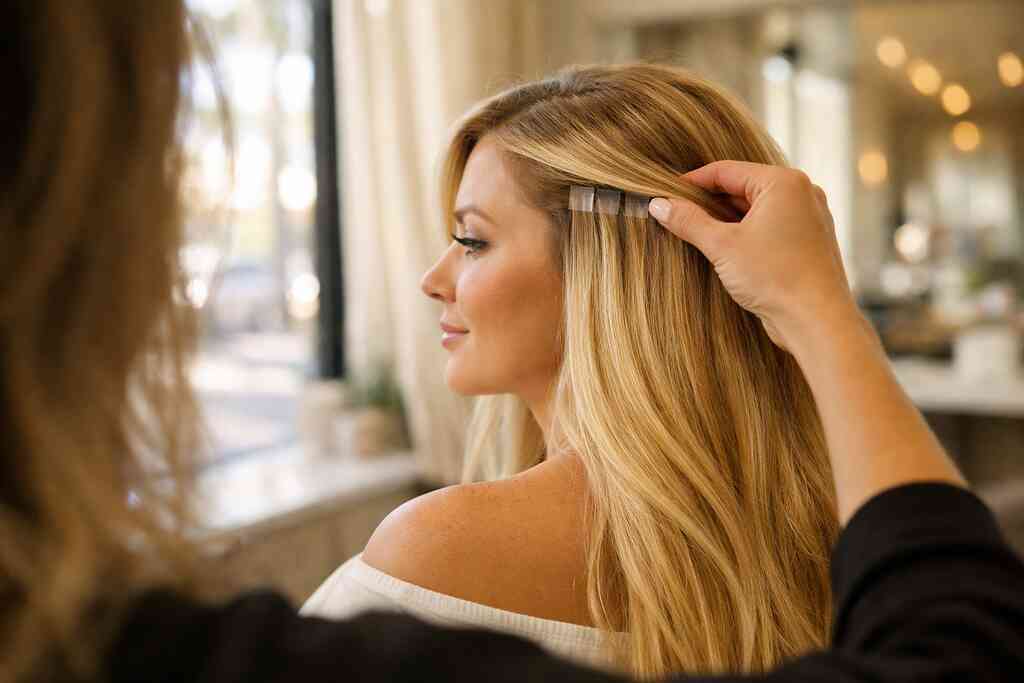
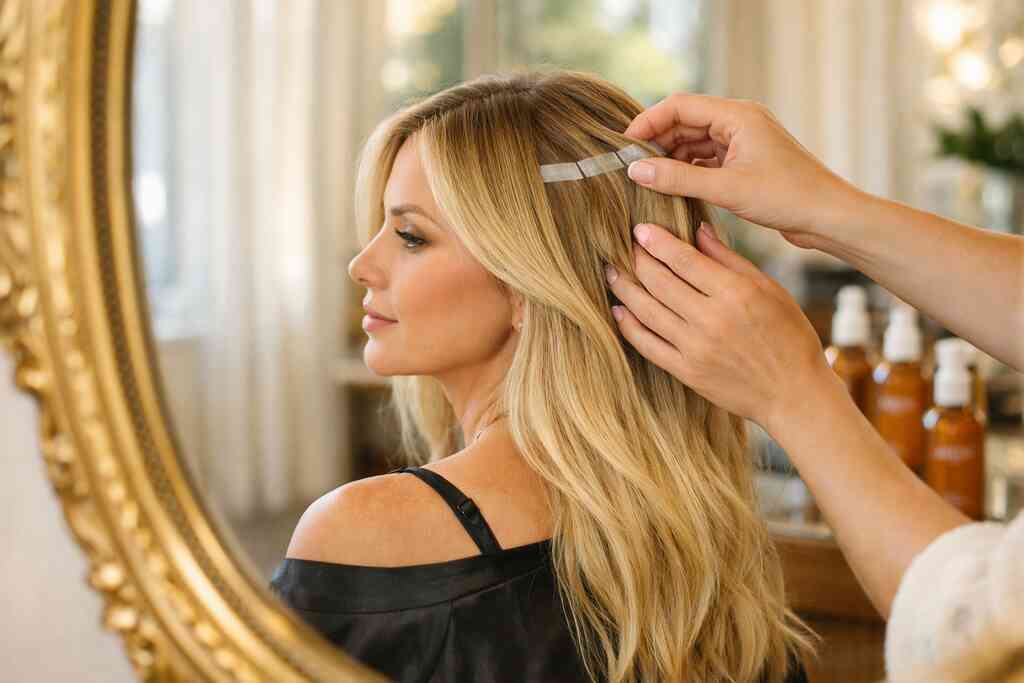
Tape-in extensions have earned their popularity, especially among clients with finer hair. The thin, flexible adhesive tabs lay flat against the scalp and distribute weight evenly. This gentle pressure profile reduces traction on individual follicles, which matters when humidity already stresses the hair shaft. For our Delray Beach clients with fine or thinning hair, tape-ins often represent the most comfortable entry point. The medical-grade adhesives used in premium tape lines resist moisture well when applied with proper technique. However, the edge seal makes the difference between success and slippage. We use a specialized sealing tool that creates a micro-thin barrier around each tape’s perimeter, preventing water from creeping underneath. Our tape-in extension aftercare protocols include specific product restrictions that preserve this seal integrity.
The critical vulnerability with tape-ins lies in the sandwich gap-the space between the two adhesive surfaces. When chlorinated pool water or saltwater penetrates this gap, it breaks down the adhesive. We counteract this by applying a humidity-resistant sealant to the exposed edges of every tape row, effectively waterproofing the bond. Clients who follow our maintenance schedule faithfully often achieve six to eight weeks of hold, even through July’s most oppressive humidity. The lightweight nature of tape-ins also means less tension on your natural hair when it swells. This reduces the risk of traction alopecia compared to heavier methods. If you’re seeking the best methods for humid weather without committing to significant bulk, tape-ins deserve consideration.
Keratin Bond Extensions: Seamless and Sweat-Proof When Done Right
Keratin bond extensions represent the closest thing to a permanent solution for humidity-prone hair, provided the bonds are fused correctly. The science is elegant: the same protein that forms your natural hair’s structure-keratin-becomes the attachment mechanism. When we apply a keratin bond using our ultrasonic fusion tool, the protein melts and encapsulates your hair strand at the molecular level. This creates a water-resistant seal that sweat and humidity struggle to penetrate. Proper fusion temperature matters critically. Overheated keratin becomes brittle, while underheated keratin never fully polymerizes, leaving channels where moisture can enter. Our stylists train extensively on temperature calibration specific to our climate. We adjust fusion settings based on the day’s dew point, your hair’s porosity, and the extension hair’s origin.
The seamless nature of keratin bonds makes them ideal for active Delray Beach lifestyles. Unlike bulkier attachment methods, individual keratin bonds move independently with your natural hair. This means less torque on each attachment point during windy beach walks. The bonds are virtually invisible, allowing you to wear your hair up without revealing your secret. Sweat resistance comes from keratin’s hydrophobic properties once properly cured. The cured protein repels water rather than absorbing it. For clients who prioritize discretion and durability, keratin bond extensions are worth the investment. Our hair salon services include a thorough consultation about whether your hair density and texture can support this method long-term.
Hand-Tied Wefts: The Breathable Solution for Summer Survival
Hand-tied wefts have revolutionized how we approach extensions in humid climates. Unlike machine-made wefts that use bulky stitched edges, hand-tied versions feature an impossibly thin, flexible top line secured with a single durable thread. This whisper-thin profile sits flush against your scalp without creating the dense ridge that traps heat and moisture. We install them using a beaded row technique that lifts the weft slightly off the scalp, creating a ventilation channel. Air circulates freely through this gap, keeping your scalp cooler and reducing the humidity buildup that accelerates bond deterioration. The breathable nature of hand-tied wefts makes them the summer survival choice for clients with medium to thick hair. They provide substantial volume and length without the suffocating weight of traditional weft installations.
The maintenance advantage becomes apparent within the first week. Clients report less scalp sweating compared to other methods, which translates to longer-lasting installations. The beads that secure the weft row distribute tension across multiple points, preventing the concentrated pulling that can cause headaches. When you come in for maintenance, we simply open the beads, slide the weft up, and resecure everything-no adhesives to dissolve, no bonds to break. This reusability makes hand-tied wefts a sustainable and cost-effective choice. For anyone searching for the ultimate hair extensions guide, hand-tied wefts deserve prominent placement. Their combination of breathability, durability, and natural movement suits our coastal lifestyle perfectly.
I-Tip vs Tape-In: A South Florida Showdown
The I-tip versus tape-in debate intensifies when humidity enters the conversation. I-tip extensions use small, bead-like attachments that clamp onto your natural hair without heat or adhesive. This mechanical attachment method remains unaffected by moisture, which gives I-tips an advantage during Delray Beach’s rainy season. Water cannot dissolve a copper bead the way it breaks down adhesive tapes. However, the beads can become visible if your hair is very fine, and the installation process takes longer. I-tips also require more frequent maintenance to move the beads up as your hair grows. The weight distribution differs substantially; I-tips concentrate tension on individual points, while tape-ins spread the load across wider adhesive patches.
For active swimmers and beach lovers in Palm Beach County, I-tips often emerge as the winner. They withstand submersion without compromising their grip, and they dry without retaining moisture that could lead to mold. Tape-ins require strict adherence to drying protocols after any water exposure. The cost comparison also favors I-tips in the long run. The beads are reusable through multiple cycles, and the extension hair itself lasts longer because the attachment doesn’t degrade. Tape-ins require new adhesive tabs at each reapplication. When you consult with our extension specialists, we walk through your lifestyle factors before recommending either path. No single method works for everyone, and honest guidance is what you’ll find at a local salon that prioritizes your results.
Fusion Extensions: The Moisture Barrier That Handles Our Humidity
Fusion extensions take the keratin bond concept to its conclusion by using pure keratin tips pre-attached to each extension strand. The application involves a specialized heating tool that melts the keratin tip just enough to fuse it around your natural hair. What emerges is a continuous protein sheath that seals your hair inside a moisture-resistant barrier. The science behind this method fascinates us because it mimics how healthy cuticle scales naturally protect the hair cortex. When we complete a fusion installation at Rové, the bond point becomes the most protected part of the strand. Water beads up and rolls off rather than penetrating. Sweat evaporates from the surface without affecting the internal structure. Fusion extensions offer the moisture barrier that handles our humidity with resilience.
The longevity statistics support fusion’s reputation. Clients who maintain proper care routines achieve four to five months between installations-longer than adhesive-based methods in our climate. The keratin tips gradually break down through natural wear rather than catastrophic failure, giving you warning before any bond requires attention. The seamless appearance allows styling freedom without revealing attachment points. You can wear sleek high ponytails, intricate updos, or beachy waves with confidence. The initial investment runs higher than other methods, but the extended wear time and reduced maintenance visits balance the total cost. We recommend fusion extensions for clients committed to their extension journey who want maximum durability.
Why Placement Matters More Than Method in a Coastal Climate
Even the most advanced extension method fails when installed without consideration for our coastal environment. Placement strategy determines whether your extensions create ventilation or suffocation. We map each client’s head with attention to sweat gland density, hair growth patterns, and lifestyle. The nape area requires special handling because it accumulates the most perspiration and friction. We leave strategic breathing zones between attachment rows in high-heat areas, creating channels where air can flow and moisture can escape. This architectural approach prevents the “greenhouse effect” where trapped humidity accelerates bond degradation. Extension rows placed too close together create a moisture sandwich that no product can rescue.
The crown area presents another placement consideration specific to South Florida. Sun exposure beats down directly on this zone during outdoor activities. We angle weft placements slightly to create a protective overlap that shields your scalp without creating heat-trapping density. This strategic angling also affects how your hair moves in our constant coastal breeze. Extensions placed with wind direction in mind behave naturally rather than clumping or exposing attachment points. Our consultations include movement analysis where we observe how your hair naturally falls. This intel informs every placement decision, ensuring your extensions enhance your daily life. Clients often tell us their hair finally feels like their own after we apply these climate-specific placement principles.
Frequently Asked Questions
Question: After reading your blog post ‘Best Hair Extensions for South Florida Humidity in 2026,’ what’s the one critical step most salons skip that makes humidity resistant hair extensions actually work?
Answer: The single most overlooked step is preconditioning the extension hair before it ever touches your head. At Rové Hair Salon we developed a proprietary process that submerges every weft, tip, and tape row in a controlled solution to partially seal the cuticle without stiffening the strand. This creates a moisture modulator-a semi-permeable barrier that slows how quickly atmospheric water penetrates the hair. When combined with our anti-humidity keratin treatment in Delray Beach for your natural hair, both your own strands and the extensions absorb moisture at an identical pace. That eliminates the texture mismatch and internal swelling that shatter bonds by noon. Most South Florida hair extension tips stop at product choice, but without this climate-adapted pretreatment even premium human hair extensions will frizz and slip in our dew point.
Question: I’m torn between tape-in extensions and I-tips. In Palm Beach County humidity, which is truly the best extension method for humidity-and what does Rové Hair Salon do differently to make either last?
Answer: For our Delray Beach clients who love the beach or a daily Atlantic Avenue stroll, we often recommend I-tip extensions because the mechanical bead attachment remains entirely unaffected by moisture-water cannot dissolve a copper bead the way it seeps under tape adhesives. Our I-tip vs tape-in South Florida showdown consistently shows that I-tips survive complete submersion and salt water without degrading. That said, tape-in extensions can be excellent for fine hair if you have a stylist who seals the tape edges with a specialized micro-barrier tool, which is exactly what we do. Beyond method, what matters more is our breathable extension placement architecture. We create intentional negative space between attachment rows, allowing scalp heat to dissipate and preventing the “greenhouse effect” that loosens bonds from underneath. Whether you choose lightweight tape-ins, keratin bond extensions, or our summer-proof hand-tied wefts, the Rové difference is fuse temperature calibrated to the day’s dew point and tension spread across multiple beads or tapes. That is why our clients go four to five months with fusion extensions and six to eight weeks with tape systems-even through July. Simply put, you get a luxury experience that treats placement as an airflow science, not just a pattern.
Question: What is the best extension aftercare in humidity to stop mold, prevent frizz, and keep my bonds secure when I’m constantly outdoors in South Florida?
Answer: Aftercare is where most extensions fail, especially when swimming or sweating. The foundation is a strict drying protocol: we teach our clients to blow-dry the bonds on a cool-low setting immediately after any water exposure, never letting moisture sit against keratin or adhesive. Extension-safe finishing products are non-negotiable-we use and recommend lightweight anti-humidity hair care mists that coat the cuticle without weighing down the weft. For mold prevention, we advise cleansing the scalp with a sulfate-free antifungal shampoo every other week and never sleeping on wet hair. Our extension maintenance routine includes a bond-by-bond inspection every four to six weeks where we re-seal any edges that have started to lift and apply a fresh moisture-resist glaze. Protecting extensions while swimming in salt water means a pre-soak in fresh water and a leave-in conditioner barrier before you dive. At Rové we coach you on styling tips for extensions that work with our coastal breeze-like using a silk scarf under a hat and avoiding heavy oils near the attachment points. All of this is built into your custom color match extensions consultation, so you leave with a practical, day-by-day plan that keeps your luxury hair looking flawless from Pineapple Grove to the beach.
Question: My scalp feels itchy and irritated after a few days with extensions in humid weather. Is that normal, or am I doing something wrong-and how does Rové solve it?
Answer: That irritation is a signal of trapped heat and moisture, not a flaw in extensions themselves. In high dew point conditions, the micro-climate against your scalp can become a sauna, breeding bacteria and loosening bonds from the skin side. Our solution is two-fold. First, we sculpt breathable extension placement that leaves strategic ventilation channels in high-sweat zones like the nape and crown, so air circulates freely and sweat evaporates rather than puddles. Second, every installation at Rové includes a scalp treatment session beforehand to balance sebum and calm sensitivity. For clients with fine hair, our lightweight hair extensions-often hand-tied wefts placed on a beaded row lifted off the scalp-dramatically reduce tension and itching. Scalp health is a priority, not an afterthought; we check bead tension, recline wefts at grow-out appointments, and teach you how to cleanse the scalp beneath the rows without dislodging the bonds. With our anti-humidity hair care and proper drying techniques, the itchy, tight feeling disappears and you can finally enjoy the summer-proof extensions that real life here demands.