Why your extensions start slipping, tangling, or looking tired long before you expected
If your extensions felt perfect on day one and a little sad by week two, you are not imagining it. That frustration is common, and it usually means the aftercare routine missed a few small but important details. Here in Delray Beach, humidity and daily wear change the rules fast. A polished install can still fail if the first few habits are rough on the bonds.
The first 48 hours after installation and the habits that make or break the bond
The first couple of days matter more than most people realize. During that window, keep tension low, moisture controlled, and manipulation minimal. If you are tempted to keep touching, styling, or testing the bonds, pause. That urge is normal, but it can shorten extension longevity before the install even settles.
We hear this almost every week from clients who want their hair to look effortless for brunch on Atlantic Avenue or dinner in Pineapple Grove. The best move is simple: keep your hands out of it, avoid heavy sweating, and follow your stylist’s specific instructions. For anyone comparing install types, hair extension aftercare and an extension maintenance routine should be part of the original decision, not an afterthought.
How South Florida humidity, salt air, and sweat change the rules in Delray Beach
South Florida humidity does more than frizz the top layer. It can swell the cuticle, encourage tangling, and make attachment points feel softer or stickier. Salt air adds another layer of dryness, especially if you spend time near the beach or keep a busy schedule outdoors. In Delray Beach, that means your routine has to be smarter than a generic internet checklist.
The mistake we see most often is treating extensions like natural hair with no extra needs. They are beautiful, but they are not self-maintaining. If you live near the coast, summer hair extension care in Florida humidity becomes a real strategy, not a seasonal tip. That is especially true for clients balancing workouts, pool days, and blowouts.
The early warning signs you should never ignore, from shedding to matting to dull ends
Extensions usually give signals before they become a problem. Shedding around the attachment area, a rough halo of tangles at the nape, dull ends, and slipping pieces all deserve attention. If the blend starts looking separated, the issue is rarely “just the hair.” More often, it is friction, product buildup, or maintenance timing.
One client in Palm Beach County came in convinced her extensions were “bad hair.” They were not. The row had started matting because she was pinning it tightly before spin class and sleeping with damp roots. Once we corrected the routine, the hair looked cleaner and moved better. That is the part most people miss: extension damage often starts with habits, not the install itself.
The extension care routine that actually keeps the blend seamless
A good routine should feel simple enough to repeat. If it feels complicated every morning, you will not keep it up. The goal is to protect the attachment points, preserve the blend, and keep the hair soft without making it limp. That balance is what separates natural-looking extensions from obvious ones.
How to care for hair extensions without stressing the attachment points
Start with gentler handling than you think you need. Hold the hair above the bond or weft when brushing or detangling. Avoid aggressive twisting, rough towel drying, and tight elastics near the foundation. Those small choices reduce tension and help you avoid extension damage before it begins.
A good routine also changes by method. Maintaining tape-in extensions is different from maintaining sew-in extensions, and both differ from maintaining keratin bond extensions or maintaining hand-tied extensions. If you are unsure which method you have, ask your stylist to show you exactly where the stress points are. For many first-time wearers, how to care for hair extensions with extension-safe shampoo is the best place to start.
The brushing pattern that protects tape-ins, sew-ins, hand-tied rows, and keratin bonds
Brushing is not just brushing. It is a pattern. Support the hair at the root area, detangle the ends first, then move upward in small sections. This minimizes pulling and helps prevent extension tangling, especially after a windy day near the Intracoastal or a long drive across Palm Beach County.
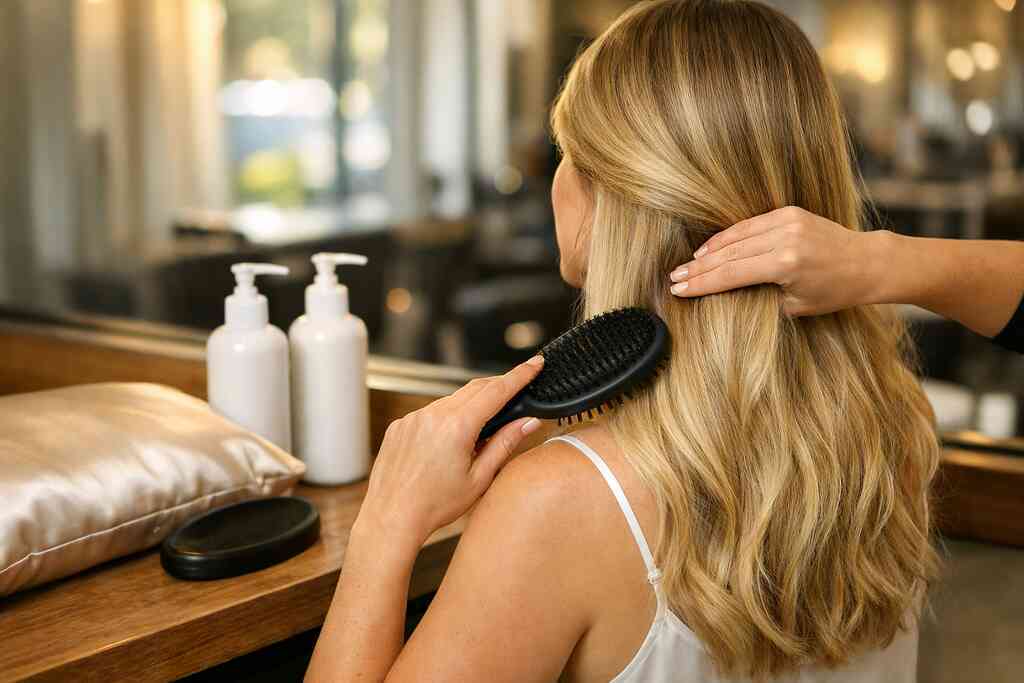
Use a loop brush or a soft extension brush if your stylist recommends it. Brush before washing, after washing, and before bed. Keep the tension light around tape-ins and keratin bonds. If you wear rows, be extra careful at the seams, where friction can collect quickly. For clients who ask about sleeping with hair extensions and preventing extension tangling, the answer starts with brushing well and sleeping dry.
Sleeping with hair extensions the way stylists recommend so you wake up with less friction
Nighttime matters more than people expect. Loose braids, low ponytails, or a silk pillowcase can lower friction and keep the blend smooth. If you toss and turn, the hair rubs against itself, which creates tiny tangles that build up fast. That is especially true for thicker installs and longer lengths.
Here is a simple night routine:
- Brush gently before bed.
- Make sure the roots are fully dry.
- Braid loosely or gather the hair into a soft low style.
- Sleep on satin or silk if you can.
That small routine helps with minimizing friction on extensions and makes mornings easier. If you are balancing work, family, and late dinners on Atlantic Avenue, you need a routine that protects your time too.
What you wash with matters more than you think
Washing is where many good extension installs start to fade. People use the wrong shampoo, scrub too hard, or pile conditioner too high near the foundation. The result is slipping, buildup, and dried-out ends. A better wash routine can change everything.
Why extension-safe shampoo and sulfate-free conditioner are non-negotiable
You need a gentle cleanse that protects the attachment and respects the hair fiber. Sulfates can strip too much moisture, and heavy formulas can leave residue near bonds or tapes. A good extension-safe shampoo and sulfate-free conditioner for hair extensions helps keep the hair clean without making it brittle. That matters even more in South Florida, where sweat and environmental buildup are part of life.
This also helps with extension hydration and moisture balance. You want the mid-lengths soft, but you do not want anything oily creeping into the foundation. If you have blonde pieces, color-treated pieces, or a lived-in blend, cleaner formulas help preserve the tone longer. That is why so many guests at a Delray Beach hair salon ask for product guidance before they ever book maintenance.
Washing hair extensions without drying out the mid-lengths or loosening the install
The best washing technique is controlled and calm. Apply shampoo only where the scalp needs it, then let the lather rinse through the lengths. Do not bunch the hair up into a rough scrub. That creates tangles and can stress the rows or bonds.
Conditioner should stay from mid-lengths to ends only. Keep it away from tape, bonds, and seams unless your stylist has given you a different method-specific instruction. If you need deeper moisture, use a lightweight extension-friendly leave-in conditioner on the ends, not the roots. That approach protects the install while still keeping the hair polished.
How often to wash in real life when you exercise, swim, or live near the beach
There is no one perfect washing schedule. It depends on your scalp, your lifestyle, and how much time you spend in humidity, salt water, or the gym. If you exercise often, rinse or wash after sweaty days. If you swim, cleanse sooner rather than later. If you live near the beach, you may need a rhythm that is lighter and more frequent than someone inland.
Here is a simple way to think about extension washing frequency:
- Wash after heavy sweat.
- Wash after pool or ocean exposure.
- Wash when roots feel oily.
- Wash when the ends start feeling coated.
If you are comparing routines, washing hair extensions and extension washing frequency in Delray Beach should be tailored to your actual week, not a perfect ideal. That is especially true for busy clients in Delray Beach and Boca Raton.
Scalp care with extensions when you need cleansing without disturbing the foundation
A clean scalp supports better retention. It also feels better. But you still need to clean gently so you do not loosen the base. This is where targeted scalp care matters, especially if you have a sensitive scalp or wear denser installs.
Use fingertips, not nails. Focus shampoo on the scalp, then rinse thoroughly. If buildup is an issue, ask about a clarifying strategy that is safe for extensions. For more detailed support, scalp care with extensions and extension installation aftercare can make a major difference, especially if you are dealing with oil, sweat, or product residue.
The styling decisions that keep your hair looking expensive instead of overworked
Styling can make extensions look seamless or tired in one afternoon. Heat, product buildup, and rough blow-drying all add up. The goal is polished movement without stress. That means lighter hands, smarter tools, and better timing.
Heat protection for extensions and the temperature mistakes that shorten their life
Extensions need heat protection every time you style them. That includes blowouts, curling irons, flat irons, and hot brushes. High temperatures can dry the hair faster and make the ends look frayed. If your tool is scorching, you are shortening the lifespan of the hair.
Stay conservative with heat. Use a protectant before styling, and keep the iron moving. Do not clamp the same section repeatedly. If you need smoother results, choose better prep rather than more heat. For guided support, heat protection for extensions and extension-safe styling products is a smart part of the conversation before you reach for your favorite tool.
Extension-safe styling products that smooth without creating buildup or slipping
Not every product that feels luxurious is extension-friendly. Heavy oils, thick creams, and too much serum can collect near the bonds and make the hair separate sooner. Instead, reach for lightweight smoothing products that control flyaways without coating the base.
Think in layers, not piles. One small amount is usually enough. If you have blonde pieces, keep your styling products color-safe. If you wear brunettes or dimensional brunette blends, choose products that preserve softness and shine without flattening the dimension. For many guests, blonde extension aftercare and color-safe care for extensions and brunette-specific guidance go hand in hand.
Extension-safe blowout technique for polished movement without unnecessary tension
A good blowout should not yank at the base. Use a nozzle, direct the airflow downward, and keep tension gentle at the root area. Round brushes are helpful, but only if you are not pulling hard against the attachments. The hair should move. It should not fight you.
We often see people overwork the top layer while ignoring the underlayers, and that creates uneven stress. A smoother, lower-tension finish lasts longer and looks more expensive. If you love a salon finish, ask for an extension-safe blowout technique rather than a generic one. That matters whether you are heading to a dinner in Pineapple Grove or a wedding in Palm Beach County.
Protecting blonde, brunette, and color-treated extensions from brassiness and fade
Color is part of the extension story. Blonde pieces can warm up too fast. Brunettes can lose their depth. Color-treated extensions can fade if the wrong products or too much heat are involved. The fix is not more pigment every week. It is better care and smarter styling.
If you wear light pieces, use purple products sparingly and only when needed. If your blend is darker, keep shine without loading on heavy oils. The real goal is seamless extension blending, not just surface gloss. For guests considering brunette extension aftercare and seamless extension blending, color planning should match the install from the beginning.
When to book maintenance before the damage becomes expensive
Maintenance is not a sign that something went wrong. It is what keeps the install looking intentional. If you wait too long, the hair can matte, slip, or start pulling in uncomfortable ways. That turns a simple refresh into a bigger fix. 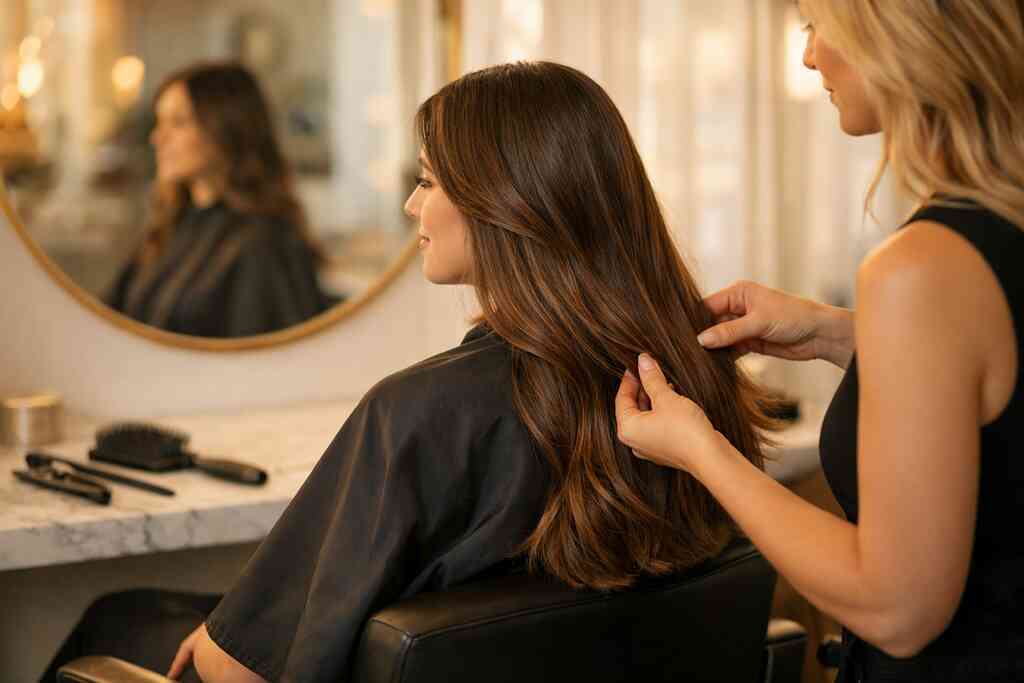
Signs extensions need maintenance and when a salon adjustment is smarter than DIY
You should book maintenance when the hair starts feeling different at the base. Watch for slipping bonds, uneven row tension, visible attachment points, or tangling that returns right after brushing. If the blend has shifted, DIY fixes usually make the problem worse. A quick salon adjustment is almost always the safer choice.
The question we get most often is simple: “How do I know it is time?” The answer is that you can usually feel it. The hair starts behaving differently before it looks obviously wrong. If you want a clear checklist, signs extensions need maintenance and when to book a salon adjustment can help you spot the difference early.
Extension repair and replacement versus a refresh of the install and color match
Not every issue needs replacement. Sometimes the extension hair is still usable, but the placement needs adjustment or the color needs refining. Other times, the ends are too worn, and replacement is the smarter investment. A good stylist should tell you the truth, not push the most expensive option.
Here is a simple comparison:
SituationBest next stepMild slipping or shiftingRefresh the installColor looks slightly offReassess the matchEnds feel dry and roughConsider repair or partial replacementMatting near the baseBook immediatelyHair still soft but grown outMaintenance adjustmentThat decision is where expert eyes matter. If you are unsure, how to extend the life of hair extensions with a salon aftercare consultation is usually the smartest next step.
How to extend the life of hair extensions with a salon extension aftercare consultation
A consultation should feel practical, not overwhelming. Bring the products you use, describe your wash schedule, and be honest about workouts, swimming, and heat styling. That helps your stylist build a real plan instead of a generic one. It also helps with extension maintenance for fine hair, extension maintenance for thick hair, and color-safe aftercare for extensions.
At Rové Hair Salon, we like to think in terms of the whole picture. That means your cut, your color, your texture, and your daily routine all matter. Whether you need Delray Beach hair extension care near Atlantic Ave or simply want better guidance for extension longevity, the best plan is the one you can actually follow.
Your next move at a Delray Beach hair salon that understands extension longevity and luxury care
If your extensions are starting to feel high-maintenance, do not wait until the matting gets worse. Book a focused check-in, bring your questions, and ask for a routine that fits your real life in Delray Beach. A good stylist can help with everything from hair extensions Delray aftercare to maintenance for a busy South Florida schedule. You do not have to figure it out alone, and you do not have to fix it all today. Start with one consultation, one honest conversation, and one better routine.
Frequently Asked Questions
How often should you maintain hair extensions in South Florida?
It depends on the extension method, your growth rate, and your lifestyle. In humid South Florida, most people need maintenance sooner than they expect because sweat and moisture can speed up tangling or slipping. A stylist can look at the base, the blend, and the condition of the hair to set the right schedule. If you swim, work out often, or live near the beach, regular check-ins matter even more. ### What shampoo is safest for hair extensions?
Choose an extension-safe shampoo that is gentle, sulfate-free, and light enough not to leave residue. A sulfate-free conditioner is also important, but keep it away from bonds and tapes unless your stylist says otherwise. The safest formula is usually one that cleans well without coating the hair. If you are unsure, ask your salon to recommend a routine based on your specific install.
Can you sleep with wet hair extensions?
It is not a good idea. Wet extensions are more likely to tangle, stretch, and create friction overnight. The base can also stay damp longer, which is uncomfortable and can stress certain install types. Before bed, make sure your hair is fully dry, then braid it loosely or secure it in a soft style.
What are the signs that extensions need maintenance?
Common signs include slipping, matting, excess tangling, visible bonds, uneven blending, and ends that feel dry or rough. If the style suddenly feels different at the root, that is a warning sign. Do not wait for the problem to become obvious. A quick maintenance visit is usually easier and less costly than fixing damage later.
How do you protect extensions from humidity in Delray Beach?
Keep the hair dry when possible, use lightweight anti-frizz products, and avoid overloading the hair with oils or creams. Satin or silk at night also helps reduce friction. In Delray Beach, humidity often shows up fastest around the roots and ends, so gentle brushing and timely wash days make a real difference.