
Why Your Blonde Feels Ruined After One Beach Week and What Bond Repair Can Actually Fix
You walked out with bright blonde, then one beach week made it feel brittle and thirsty. That frustration is real. In Delray Beach, sun, salt, wind, and humidity work fast on color-treated hair. If you are wondering why your tone faded and your ends feel rough, you are not imagining it.
When Olaplex and Bond Repair Are Not the Same Thing, Even Though Both Promise Stronger Hair
People use Olaplex vs bond repair as if it is one simple comparison. It is not. Olaplex is one brand built around bond rebuilding, while “bond repair” is the larger category. That category includes many salon bond treatment formulas, each with different chemistry and goals.
Here is the part most people miss: disulfide bond repair focuses on internal links inside the hair fiber. Some newer formulas also support cuticle strengthening, porosity balancing, and protein-moisture balance. So if you are comparing products, you are not just comparing names. You are comparing how they behave on your specific hair.
On a recent week of appointments, we saw a woman with pale balayage who swam daily near the coast. Her hair did not just feel dry. It snapped at the mid-lengths, frizzed at the crown, and lost shine near her part. She needed more than a gloss. She needed a real damage treatment plan.
If you want a deeper local breakdown, start with Why Rove Hair Salon Delray Beach Recommends Olaplex 2026. It helps you understand why a single label cannot explain every repair result.
The Hidden Damage South Florida Sun, Salt, and Humidity Do to Color-Treated Hair
South Florida weather is hard on hair in ways that sneak up on you. UV exposure weakens the outer layer. Salt pulls moisture out. Humidity swells the fiber, then collapses it again. That cycle makes color-treated hair repair more urgent than many people expect.
If you live near Atlantic Avenue or spend weekends in Pineapple Grove, your hair meets the elements daily. Blonde can turn dull. Brunette can go flat. Gray blending can lose its clean dimension. Even a healthy style can start feeling older than it is.
The damage is not only cosmetic. It affects elasticity. It affects how evenly your hair takes color next time. It also changes how a blow-dry behaves after ten minutes outside. That is why bleach damage recovery and heat damage repair need different strategies, not just more conditioner.
If you are already noticing roughness, your hair is asking for help early. A well-timed hair treatment visit can keep small issues from becoming a full correction later.
Signs Your Hair Needs Repair Before Your Next Balayage or Highlights Appointment
You do not need to guess. Your hair usually tells you. The warning signs are simple once you know what to look for. They show up before your next balayage or highlights appointment.
Watch for these signs:
- Tangling at the nape after washing
- Ends that stretch, then snap
- Hair that feels gummy when wet
- Dull color that fades quickly
- Frizz that returns after styling
- A rough feel even after leave-in product
If two or more of these sound familiar, you likely need repair before more lightening. That matters because blonding on compromised hair can make breakage worse. It also makes the next service less predictable. A salon for blondes Delray should look at both tone and strength, not just brightness.
What Every Delray Beach Hair Salon Client Gets Wrong About Repair Treatments
Most clients think every damaged-hair product does the same job. That is the mistake. A Delray Beach hair salon can give better results when it matches the treatment to the problem. Repair, smoothing, and strengthening are related, but they are not interchangeable.
Disulfide Bond Repair Versus Cuticle Smoothing Versus Protein-Moisture Balance
Here is the simple version. Disulfide bond repair works deeper in the fiber. Cuticle smoothing helps the outside lie flatter. Protein-moisture balance keeps hair from feeling mushy, dry, or stiff. Each one matters, but for different reasons.
If your hair feels rough but still strong, smoothing may be enough. If it stretches too far when wet, you may need internal repair. If it feels soft yet weak, protein may be missing. That is why a healthy hair salon Delray should diagnose first.
A useful way to think about it is this:
Hair issueWhat usually helps mostWhat it does not solveBreakage from lighteningBond repairSevere moisture lossFrizz from humidityCuticle smoothingBroken internal bondsMushy, overconditioned hairProtein balanceDeep structural damageRough ends from heatRepair plus trimmingSplit ends already formedIf you are comparing services, ask how the treatment fits your color history. That question tells you a lot about whether the salon is treating the cause or the symptom.
Why Bleach Damage Recovery and Heat Damage Repair Need Different Strategies
Bleach damage and heat damage often show up together, but they do not behave the same way. Bleach alters the structure from the inside out. Flat irons and hot tools usually dry out the outside first. That means the fix cannot be identical.
For bleach damage recovery, the priority is internal support. You want stronger fiber integrity before your next color. For heat damage repair, you often need more leave-in bond support plus thermal protection and a haircut. That is where how often to cut hair becomes part of the plan, not an afterthought.
We had one client who used a flat iron daily and also lightened her ends every few months. Her issue was not just dryness. It was layered damage. We adjusted her routine, trimmed the weakest ends, and changed her at-home care. That is usually the turning point.
This is also why a hair color correction appointment should always include a damage conversation. Color correction without repair is a gamble. Repair without a haircut can also stall progress.
When Bond Repair for Blondes Is Not Enough for Brunettes, Gray Blending, or Lived-In Color
Bond repair for blondes gets the most attention, but brunettes need it too. Gray blending clients often want shine, softness, and movement without sacrificing depth. Lived-in color needs the same support because softer color transitions still involve lightening and toning.
If you wear dimensional brunette, your ends can still be porous even if your overall color looks rich. If you wear lived-in color, your lighter pieces still need protection. If you are choosing between balayage vs highlights, repair should factor into that decision.
The mistake we see most often is this: people wait until the hair looks bad. By then, the repair plan is more complicated. A better move is to protect the hair before the next appointment and keep the canvas strong.
The Salon Science Behind Stronger Hair Without Overloading It
There is a fine line between repaired hair and overloaded hair. Too much treatment can make strands feel coated, soft, or flat. Too little leaves you chasing breakage. The art is finding the dose your hair can actually use.
How Internal Hair Repair Works Inside the Fiber Instead of Just Coating the Outside
Internal hair repair works below the surface. It helps support weakened areas inside the fiber, which is why it can improve feel, shine, and resilience at once. Surface-only products can make hair look better fast, but they do not always change how the fiber behaves.
That is why hair bond rebuilding matters after repeated lightening. It is not magic. It is chemistry that helps reinforce weak spots so the hair can better tolerate brushing, styling, and moisture changes. A strong professional bond builder should support the service, not disguise damage.
You will often hear this explained as internal versus external repair. Internal repair strengthens the structure. External products protect the cuticle and reduce friction. You usually need both, but in different amounts. That balance is what separates a quick fix from a healthy long-term plan.
If you are curious about the broader menu of services that support repair and style, browse hair salon services. It helps when you want one plan for cut, color, and recovery.
What a Professional Bond Builder Does Before Color Correction or Pre-Color Bond Protection
Before a major color session, a bond builder can act like insurance. It helps protect fragile areas during lifting, toning, or correction work. In color correction, that matters because the hair may already be uneven from earlier services or box color.
Pre-color bond protection is not the same as a treatment you use after. Before color, the goal is to reduce stress on the hair while you work on the tone. After color, the goal is to stabilize the fiber and help the finish last longer. Those are related, but different, steps.
For clients booking hair color correction in Delray Beach, we always think about the repair sequence first. That sequence often determines whether your result looks glossy and soft, or dry and overprocessed. The best color is not just the right shade. It is the shade your hair can safely hold.
How to Choose Between Salon Bond Treatment and At-Home Bond Repair for Weekly Care
Salon treatment and at-home care should work together. The salon version is usually stronger and more targeted. The at-home version is for maintenance between visits. That distinction keeps you from overdoing it.
Use this simple filter:
- Choose salon repair for active breakage, lightening, or color correction.
- Choose at-home bond repair for weekly support and maintenance.
- Pair both with moisture if hair feels dry.
- Add protein only if hair feels weak or overly stretchy.
- Trim split ends instead of trying to repair them forever.
If your hair is fine, too much product can weigh it down. If your hair is thick, you may need more saturation and a longer routine. That is why a salon for fine hair and a thick hair stylist Delray may recommend different maintenance plans.
When Olaplex Still Makes Sense and When Newer Bond Repair Formulas Win
Not every head of hair needs the newest formula. Sometimes the familiar option still works beautifully. Other times, newer technologies handle specific damage better. The key is knowing what result you want.
The Real Difference in Results for Brittle Hair, Breakage, and Split Ends Prevention
For brittle hair, the best treatment is the one that improves flexibility without making hair feel stiff. That is why the best treatment for brittle hair is not a one-size-fits-all answer. Some formulas focus more on bond support. Others blend in conditioning agents for comfort and manageability. If your main issue is breakage, you want a treatment for breakage that actually improves resistance. If your main issue is split ends, remember this: no product truly fuses split ends back together. Split ends prevention is the real goal. That means repair, trims, and lower heat. 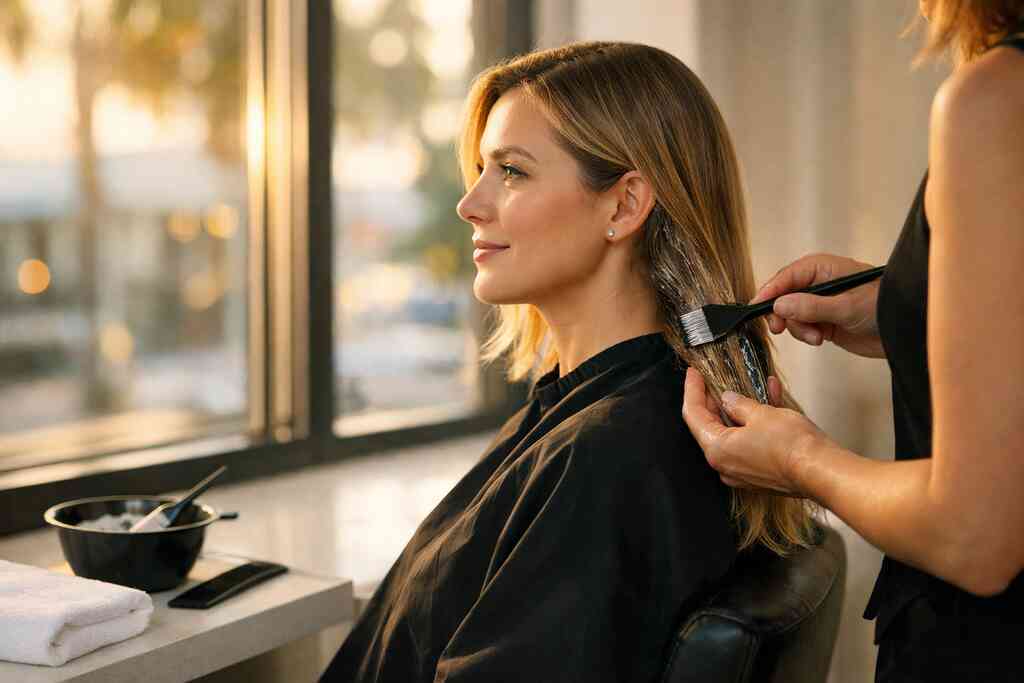
What we have seen in 2026 specifically is more clients asking for a softer, less rigid feel after treatment. They want hair that moves. They want shine without stiffness. That is where newer formulas can win, especially for people who already use a lot of styling support.
How Bond Repair Supports Hair Extensions, Fine Hair, and Thick Hair Stylist Services Differently
Extensions and natural hair do not need the same plan. Hair extensions clients need gentle repair that respects attachment points and avoids excess oils near bonds. Fine hair clients need lightweight support that does not collapse volume. Thick hair clients often need more saturation and more time for product to distribute evenly.
If you wear extensions, bond repair is about preserving the natural hair underneath. If your hair is fine, it is about strengthening without flattening. If your hair is thick, it is about making sure the repair reaches all sections evenly. That is why a skilled stylist adjusts the formula and the placement.
For extension aftercare, the needs are different enough to deserve their own routine. If that is your situation, this ultimate guide to hair extension aftercare in 2026 can help you think through the daily details.
Why Keratin Treatment, Brazilian Blowout, and Bond Repair Are Not Interchangeable
People often group all smoothing and strengthening services together. They should not. A keratin treatment service smooths and reduces frizz. A Brazilian blowout-style service also focuses on manageability and surface polish. Bond repair focuses on strengthening the hair from within.
That means they solve different problems. If your hair is puffy in humidity, smoothing may help. If your hair is snapping or stretching weakly, bond repair is the better first step. If you need both, sequence matters. Sometimes repair comes first, then smoothing later.
This matters in Palm Beach County because humidity changes the way hair behaves hour by hour. A smoothing service can make your style easier to wear. Bond repair can make it stronger. They are allies, not substitutes.
The Next Move That Keeps Your Hair Healthy Through Atlantic Avenue Weather and Beyond
You do not need a shelf full of products. You need the right rhythm. The best results come from consistent care, smart timing, and honest assessment after each service. That is especially true if you live or work near Atlantic Avenue.
How Often to Use Bond Repair Without Making Hair Feel Heavy, Dull, or Stiff
Too much bond repair can make hair feel coated. Too little leaves the hair unsupported. The sweet spot depends on texture, color history, and how often you heat-style. Most people need less than they think.
A practical approach is this:
- Use stronger salon repair after major lightening or correction
- Use at-home bond repair once or twice weekly
- Add moisture on alternating washes if hair feels dry
- Reduce use if hair starts feeling stiff or dull
- Reassess after every major color change
If your hair starts to feel hard instead of flexible, that is a signal. You may be layering too much protein-like support or too many strengthening steps. Healthy hair should feel resilient, not rigid.
The Smartest Repair Plan for Atlantic Ave Clients Booking Cuts, Color, and Blonding Together
If you are searching for a salon near Atlantic Ave, think in systems. The smartest plan combines repair, cut, and color in the right order. A trim can remove weak ends. Bond repair can strengthen what remains. Color can then sit on a better foundation.
That approach matters for balayage in Delray Beach and hair highlights in Delray Beach especially. It also matters if you are planning lived-in color in Delray Beach and want it to grow out beautifully. The cut matters too, especially for a modern shag shape or a French cutting technique that relies on movement and softness.
If you are booking a full transformation, it helps to coordinate everything through book a hair appointment in Delray Beach. That way, your stylist can plan the repair sequence around the cut and color, not after them.
What to Ask Before Your Next Hair Salon Booking If You Want Healthier Blonde, Brunette, or Gray Blending Results
Ask better questions, and you get better hair. That sounds simple, but it changes the whole appointment. If you want healthier blonde, brunette, or gray blending results, ask what the stylist sees in your hair before they book the service.
Use these questions:
- What damage do you see first?
- Do I need repair before color?
- Should my plan include a trim?
- Is this a bond issue, a moisture issue, or both?
- What should I change at home between visits?
These questions help you find a good stylist and avoid guesswork. They also make your next hair salon booking more productive. You do not have to figure it all out alone, and you do not need to solve it all today. Start with one call, one honest hair assessment, and one plan that fits your real life in Delray Beach.
Frequently Asked Questions
What is the difference between Olaplex and bond repair?
Olaplex is one brand that focuses on rebuilding broken bonds in the hair. Bond repair is the broader category that includes many products and systems. Some formulas target internal strength, while others also smooth the cuticle or support moisture balance. In practice, the best choice depends on your hair history, not the label alone.
How do I know if my hair needs bond repair?
Look for breakage, weak wet elasticity, rough ends, tangling, and color that fades quickly. If your hair feels gummy when wet or snaps easily, it likely needs internal support. If it just feels dry on the surface, moisture and smoothing may be enough. Many people need both, but in the right order.
Can bond repair help after bleach damage?
Yes, but it works best as part of a larger plan. Bleach damage recovery usually needs bond repair, moisture support, and regular trims. If the hair is severely compromised, color services should be slowed down until the fiber is stronger. That keeps the next blonde service safer and more predictable.
How often should I use bond repair at home?
Most people do well with weekly use, though some damaged hair benefits from two applications per week. If your hair starts feeling stiff, coated, or dull, cut back. Fine hair usually needs lighter use than thick or highly processed hair. Always adjust based on how your hair feels after styling.
Is bond repair better than keratin smoothing?
They do different jobs. Bond repair strengthens hair from within, while keratin smoothing helps reduce frizz and improve surface polish. If your hair is breaking, repair usually comes first. If your main issue is humidity and puffiness, a smoothing service may help more. Sometimes both are useful, but not at the same time.
Can I book repair with balayage or highlights?
Absolutely, and that is often the smartest approach. Repair before and after blonding can help protect the hair during lightening and improve the final finish. It is especially useful for balayage, highlights, and color correction. If you are in Delray Beach, it helps to ask your stylist how they time repair around the service.
What should I ask at a Delray Beach hair salon before booking repair?
Ask what type of damage they see, what treatment they recommend, and whether you need a trim first. Also ask if the plan supports your color goals, like blonde, brunette dimension, or gray blending. A strong consultation should feel specific, not generic. That is usually the sign you are in the right place.